Rebel Justice

55. From a Turbulent Past to a Creative Triumph: Lisa Azarmi on Surviving Coercive Control and Building 'Ravenous Butterflies'

Rebel Justice and Lisa Arzami Season 3 Episode 54

Use Left/Right to seek, Home/End to jump to start or end. Hold shift to jump forward or backward.

0:00 | 42:53

Send us Fan Mail

Brace yourselves for a heartening conversation with Lisa Azarmi, the creative mastermind behind the social media sensation, Ravenous Butterflies. Her journey, marked by a difficult upbringing and a tumultuous relationship, weaves a tale of resilience and self-love that is sure to strike a chord with you. She takes us through chapters in her life, from her childhood in Sri Lanka and Malawi to her subsequent move to England, where she found solace and strength through art and self-expression.

Lisa's harrowing experience with coercive control forms a crucial part of her narrative. As she recounts her struggle against emotional manipulation and bullying, she sheds light on the obstacles she faced - a family court system that failed her, friends who didn't understand her plight, and a society that lacks awareness about coercive control. Yet, she emerged victorious, and her journey of survival and resilience lends hope to  many in similar situations.

Lastly, Lisa illuminates the transformative power of art in her life, a tool she used not just to cope with her circumstances but also to create a vibrant community of over a million followers on her social media platform. She shares how her creative journey culminated in the success of her book An Apothecary of Art and offers us a glimpse of her upcoming projects.

Lisa's story is a testament to the human spirit's ability to find beauty in the darkest of times, and her insights provide a valuable roadmap for those navigating their own challenges. We are honoured and blessed to welcome Lisa to our Rebel Justice family.
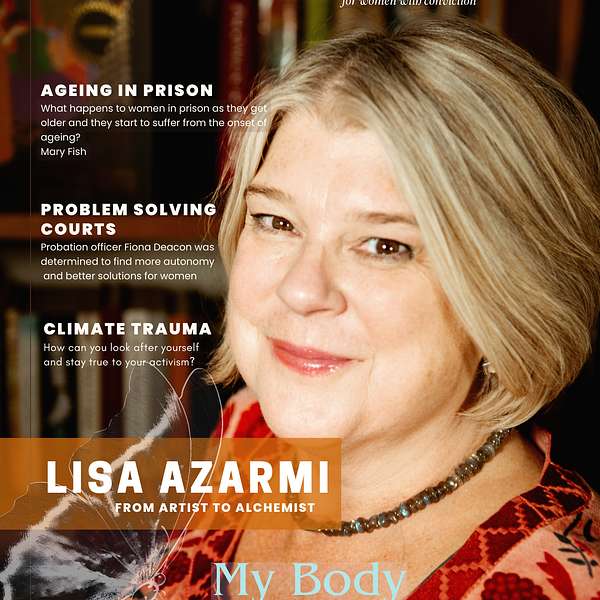
Read more about  Lisa Azarmi's journey in the next edition of The View Magazine , our 10th edition,  My body My Choice. Pre-order your copy here .

Support the show

For more unmissable content from The View sign up here

Episode 54

HOST

Farah - The View Host

Season: 3

Episode: 54

Farah - The View Host 00:01

Welcome to the View Magazine's Rebel Justice podcast. This week, we're delighted to speak with Lisa Azarmi, the founder of Ravenous Butterflies, the social media phenomenon with over 1 million followers who've found comfort and solace in her Ravenous Butterflies concept. Lisa takes art, both well known and unknown, and puts words that she finds with paintings that mean something to her. Through this journey into words and pictures, she leads us like a shaman through emotions and moods in her new book, an Apothecary of Art, which was published recently by Batsford Press and presented last week at the Bloomsbury Festival in October 2023.  Lisa shared with us her own journey through pain and hardship. She discusses her painful relationship and her husband, her divorce, raising three children, her experience with grief and how art has guided her through her life's challenges. Lisa uses repeated mantras in her work “you have to love yourself, because absolutely no one can love you the same way you love yourself, and it's not going to be any better than it is today.” Her repetition is used to appeal to the reader's emotions and focus on the importance of being present in the moment, no matter the challenging life circumstances that we might be facing. Today we're talking to Lisa, who is the creator of the Ravenous Butterflies Instagram and Facebook accounts. Tell us about you and your own background, Lisa.


Lisa Azarmi Guest :

Well, I graduated in art in 1988 at Goldsmiths with the hold of that cohort including Damien Hurston people. I was doing construction textiles. I was born in Sri Lanka. Then it was a salon. Back in the mid-60s my dad was working in tea and I lived there for five years, then moved to Malawi for a few months on the way back to England. Never been to England before, never seen television, couldn't read till I was 10. I was very much that of. I had a Ceylonese nanny who I was with the whole time. So when I left her when I was five I really felt massively bereft because I loved her. She was like my mum. She kind of like slept in the same room with me. I hardly ever saw my parents and although my dad had a good job, I mean he didn't earn any money. We just lived like that lifestyle because at that time that's the way it was. We came back to England with very little money. I can just remember it was freezing cold. I'd never seen snow before, I'd never seen television. I, basically, I was just an Indian Ocean kind of barefoot Indian Ocean girl really. And then suddenly I'm thrust into this really grey, miserable, freezing cold and everything smelled to kind of cold apples. 

I can really remember that Just driving from the airport, you know just all these tiny houses and it was just there was no colour, it didn't you know that smell of the tropics which is so intense, and I suppose that's really always stayed with me, went to school, couldn't read until I was 10, like I said and then sort of found, discovered reading. But I really threw myself into art from a very young age. It was my way, I suppose, of trying to understand the world. So I'd always be drawing or, you know, looking at picture books. 

Maybe that's why people thought I could read, because I was always, I always kind of had my head in books, but I was always just looking at the pictures and yeah, I just you know that's how it started. My brother came when I was three years old. We got on really well we still do but it was a very strange, unusual upbringing really, and I felt very detached from everybody when I came to England and I always kind of took refuge in sort of music and art and, you know, playing in the garden and things like that. I was not, I was kind of quite airy fairy, I wasn't a very natural realist and yeah, that's kind of how it started, I suppose. 

F 03:49

There is so much in that that I can personally relate to, because I was born in Uganda and brought here as a young child. I just remember standing at the top of the flight of stairs when you just send the aeroplane and just thinking, yeah, where's all the colour gone? I just look around and it's like all the colour has been sucked out of, even the people didn't have any colour. 

LA 04:09

I was used to having everybody around me with brown and delicious and smoked coconut and was very touchy, feely and lovely, you know. And I'm suddenly with these cold, isolated people that kept themselves and nobody touched you and I think my mother and I never really bonded because of that. You know, she didn't know, really know who I was. You know, never did. And yeah, I think it was, it was. It was very unusual, isn't it, coming to this country after having been brought up in that kind of an environment? 

F 04:35

Yes, I can definitely relate to that. 

LA 04:39

And the food, I mean everything, the spices, the smells, the you know everything is just so lush and I suppose I've always been kind of craving, craving for that, really, you know, since then, yeah, and I think when you grow up in the Southern Hemisphere, your senses are so completely kind of more in touch with your surroundings. 

F 04:58

The colour is so vibrant. The smell you know, you can smell the rain, you can smell the hibiscus, you can, you can smell after the rain, yeah, and here, like you said, that smell of cold apples. That's so fantastic, that's such a great way to put it. 

LA 05:10

Well, we're going from kind of rotting mangoes to cold apples. I mean, that was a difference, you know. 

F 05:15

Yes, give me rotting mangoes any day. Really I love the smell. So then you came to England and met an Iranian man and had three children. Can you tell us a little bit about that and how ravenous Butterfly started? 

LA 05:28

Well, I met Amir when I was 17, when I was at college doing A-levels, and we were both from, you know, we were both kind of from exotic places. I suppose he had arrived in England, went at 13 from the revolution in Iran and he was in political exile with his family. They'd lost everything. They'd lost, you know, a lot of family members and friends, and it was just horrendous and I kind of probably thought I could fix him. And when he did quantum physics I was doing fine art. We're very different, you know, in our types of personality and I never really could fix him. But you know, at the time I just had very, very low self-esteem. I was always very overweight. My parents, my mother in particular, was this kind of supermodel woman who just relied on her leggy looks and gorgeousness and I was always just not what she expected. She was going to have a daughter. I think she's got her six foot four son. 

Who's like that? You know, but not me, and so I think she, I think it was just weird, so I never really thought I was good enough, I suppose, to go to take it any further than he was that person, and at that time it felt right, but obviously we were very incompatible. We did. We did have three children, thankfully, because they are just brilliant and just really interesting children, sort of mixed culture children and gorgeous. And they are two, my, both my sons are very creative. They're both studying fine arts. My eldest son's doing the drawing year at the Royal Drawing School. He's just, he went to Central St Martin's. And my, my middle child, Casby, and he's down and found with doing fine art. And then there's my daughter who is at Soas actually doing world philosophies. So they're all quite interesting characters and they all kind of very much think outside the box, because they spent a lot of their time with me and I've always had the house full of crazy, mad people that are interesting and diverse and and I suppose they think that's kind of normal, which is good. So yeah, they're interesting. 

My marriage broke up and I decided well, I actually thought it was my children that was the problem. I thought they'd kind of suck the life out of me, but actually my relationship was the problem. It wasn't my children at all. So I started having psychoanalytic psychotherapy in the early 2000s 2010, something like that and I had that actually for 10 years and during that period I realised that actually it wasn't my children at all, it was my relationship with my husband that was wrong. He was, he was never around and I was kind of invisible and my weight had doubled in size and when I say double in size, I mean I was like 34 stone or something. So I had gastric bypass surgery in 2010. So this is the 2000, so this is going back a bit. But then, moving forwards, I thought that was going to fix everything, but it didn't not with our relationship. So I decided that was it. So we ended up separating in 2013 and during that period that's when I started ravenous butterflies and that's when I really, I did it for myself as a form of therapy. I did it completely for myself. 

I was a real technophobe. My ex-husband was you know. He was, you know, binary boy that worked for, you know, merchant very private banking, writing all their coding for their systems, and always told me I was rubbish. He was very, very coercive, always put me down. And so I thought, oh, you know, I can't do computers, I can't do tech, I can't do this, I can't do that. But what I could do was I could Connect with people. 

And I think that I had no idea that something like Facebook, which is where I started, was going to connect with the rest of the world the way it has, and I had no idea that there are a Lot of people out there who resonated with the way that I Was feeling at any particular time when I did a post, and I had no idea that it would take off the way that it has. So I had no expectations of it becoming, you know, million followers or whatever it is now at all. I just thought it was just, I was happy. When it was a hundred, you know, I mean, I thought it's great. Other people kind of you know, we're getting something from this poem or this piece of artwork or whatever it was. You know that I was posting and they were in Timbuktu and New York and, you know, Honolulu or wherever. You know we're up soul or wherever they were. Just, it was just like magic, you know, and yeah, that's kind of that's how it started, and he was constantly saying why are you wasting your time, why are you doing this, why are you doing that? And I just thought, you know what, just leave me alone. And I just, I just don't want to be with you anymore. 

And, yeah, I think, very difficult for women like me who probably, you know, I'm in my mid, mid to late 50s and I'd raised the family.  We went to New York. I was basically there as the kind of dutiful wife who was doing everything at home and, obviously, you know, doing part time stuff, doing my art and writing and things as well. 

But I had no income, so just speak off. So I felt very trapped and as soon as I wanted to separate or get divorced, my ex-husband, and just cut up all the credit cards, cut up all the lines of, you know, finance, you know, even didn't give me any money for food. He'd go off and go to the supermarket and buy ridiculous stuff and you know, whereas I'd been the one doing everything and, and it was just, and he refused to move out of the house and it was just a very, very difficult time. I had to go on child tax credits, which I found very demeaning, and it was just, it was because he was away abroad a lot so I couldn't go and get a job because there's nobody at home for the kids. It was just a horrible, horrible, horrible time and I kind of thought I was just gonna break under that, really Emotionally, just completely break, but I didn't. 

F 10:49

No you didn't. Good for us that you didn't really. What you're describing is classic coercive control that you know, customer for finances, the bullying, the you know good at this the gas lighting about your own hobbies and where you're getting yourself worth that those are the pure traits of someone who is a pretty nasty Coercive controller. Really, did you recognize that at the time? What was happening? Or were you To think, oh well, he must be right, because that's what most women in that position would think? Well, I must be rubbish at this or I must be.

LA 11:29

Yeah, I thought it was all my fault. I thought it was, and I still take full responsibility. I still don't think that. I still think it takes two to turn go, in a relationship, you know, if the chemistry is not right or if the, if the, you know, if the pairing of the two people isn't right. 

And we met when we were very young and he was very emotionally challenged when I, when I met him after having lost you know, it's everything that he knew really and kind of emotionally stunted I I had. I didn't, I didn't recognize it at the time at all because we didn't really talk about things like that then and my mother certainly never did. My mother always carried this resentment. She divorced my dad when she was in her early 40s, after 20 something years of marriage, and constantly blamed him. And I just said, mum, you've got to take responsibility, which you know you have to take responsibility for a breakdown of your relationship, don't, you can't just 100% blame another person. And I think I, the only thing I, was regret is that I didn't leave my ex-husband when my daughter was born and I wouldn't say he was a terrible person. I mean, he has got some lovely qualities as well, because he's not all bad, otherwise I wouldn't have got knowing the first place. But as we grew, we grew in very different ways and, and he did become a lot more controlling and a lot more coercive and I didn't. I was kind of blossoming and I lost all of that weight and I, because I was like this kind of ravenous butterfly I wanted to get out there and do stuff and it was very difficult with somebody who is constantly constraining and kind of just telling me that I was rubbish at everything the whole time and that's just in his makeup. You know, that's just. That is the way he is the wrong kind of person for me. I wish I'd known about those things about gaslighting and coercive control back in, you know, 2005 or 2007 or whatever it was, but nobody really talked about it. Otherwise I would have. I think I would have got the courage together and I also didn't share my situation either with many people. 

So it came as a big shock when I decided to leave Amir and I got blamed by, you know, some of my friends thought I was being mad, but they had no idea what it was like, and that's why I try not to judge people when they're going through situations like that Because I just think you don't know what's going on behind closed doors, you don't know what this person is really like. So I just thought, actually let's try and get, from marriage guidance counselling. And that didn't work because he never spoke about anything in the counselling sessions that we had and then just shouted at me when we left and it was just typical. 

And the minute I got divorced which actually was a lockdown, but I moved in the January from the family home, we sold it and I moved into a rental house with my children. I got my own front door key for the first time was just, I felt like I was on holiday. I mean, I could not believe my luck. It took almost 10 years to get divorced from what I wanted to divorce in 2010 and told him you know for sure, in 2013. And he just dragged it through the courts and barristers and it was so unnecessary because I ended up getting more than I'd asked for in the first place and so unreasonable and I was so relieved. Best thing I ever did. 

F 14:28

Best thing I ever did was have the children, but also best thing I ever did was get divorced you know so interesting how you talk about how he dragged you through the justice system, the family courts, and notorious for men who are abusers to drag former partners through just to the pain and judges don't understand, and barristers don't understand, and solicitors it's just today's work they don't understand the trauma and actually the violence that you go through by having to relive all of that again. 

LA 14:58

Well, I mean, I had a situation where we lived very close to Wimbledon tennis courts and I used to rent out the flat which was at the top of our house for income and he just used to come. You know, he went to Helsinki, then he moved back, then he was working in Dublin, then he'd come back at weekend, so I couldn't actually earn anything. He, you know, he wasn't always giving me any money. 

He wasn't even giving me any money to buy light bulbs or anything like that for the house, and you know, I had to maintain everything, do everything myself, and it was just a nightmare. But my lawyer was amazing, actually she was brilliant. So was my barrister and the judges. We went to court twice and the judges just sat there and said to him look, Mr. Azami, you just got to sort this out. This is just a waste of everybody's time and money. What are you doing? You know, and really in the end, the people had affected the most with, the children. It was just ridiculous and I think that it should not be allowed. And I think they've changed the law now, haven't they? to make so that women, he wouldn't, he wouldn't admit to the fact that we've been separated for three years. So I had to wait, you know, all this other more time to you know, but now I think you can get it. You know, but now I think you can get divorced by, you know, very much more quickly. 

F 16:00

There's no fault divorces, I think, which is much easier on women. Yeah, that was just terrible. I'm so sorry you had such a horrible time. It just sounds so incredibly painful and traumatic. But is that where that, Because I was going to ask you, where did Ravenous Butterflies come from? Because it's just such a beautiful kind of an, an evocative you don't think of butterflies being ravenous, but actually they are, aren't they? 

LA16:22

Well they are, especially when you see all those ornament butterflies flying down from the States down to Mexico in these kind of massive they call it “rabbles” of butterflies like a whole flock of butterflies is a rabble, which I love. I hear a mad rabble of butterflies and I just think that it was absolutely the way I was feeling. I felt that this is my time. I'm a woman who's older, who cares. I mean I'm feeling better now than I felt ever in my life. I feel wiser and more in control. I just, I totally know myself, I totally know what I want. 

I went through so much crap but actually it's been the making of me and I don't think I could have had as much impact and ravenous with the people that I've impacted throughout the world had I not had been able to be empathic and have that understanding of what other people have been through too. So I really do think that my divorce was probably the making of me and all that hardship and pain. I think that I was in a wheelchair and on crutches for almost three years because I couldn't walk. I died after, operation, that operation in New York and I was in intensive care for a week after I had that, gastric bypass surgery, all of these things. Having my son who's massively on the autistic spectrum, with ADHD, asperger's, ocd, anxiety, all of these things Both of my sons are gay, I think all of this stuff. 

I just think my mum died at the end of last year, my dog had to be put down just for Christmas, and I just think, actually, you get bombarded with things, but I'm always somebody whose cup is always almost full and I think that you have to switch negativity into positivity, otherwise you're just going to be dragged down and you're not going to survive it. And I look at myself and I just think there's so much out there, there's so much to give, there's so much that people are craving for. There's so much loneliness, there's so much destitution, there's so much poverty, there's so much sadness and misery and illness and horrible, horrible injustices in this world. People need respite from that, you know, and I kind of I love the fact that I can give that through something so simple and so nourishing, so it's kind of been the making of me really so you've personally used art as a form of creative therapy and you said it started while you were in psychoanalytical process. 

F 18:44

How did it come about? How did the idea come about? I'm really fascinated to know a bit more about how you, because the couplings are so fantastic, like the pictures and then the writing. They're just always so perfect and so beautiful. So how did you, how did that kind of come together for you? 

LA 18:58

I don't know. I think, to be honest, I mean, I've always gone to art and words, theatre, literature, songs, whatever it is throughout my life, respite and for inspiration, and it's my kind of, like my safe place. So I've had, I had this kind of quite big knowledge of things and I think, you know, growing up in the tropics, I'm always drawn to these sort of colours and richness and sounds and senses. I'm a very kind of sensual person, I suppose. So for me, if I see a painting with a beautiful image, when I'm sort of looking, you know, researching stuff for posting, I suddenly think, oh, that would go beautifully with that bit of poetry. Or I'll remember that bit from the Great Gatsby. That'd be amazing with that, you know, when he said that, and I just, and I just have been doing that for 10 years. So I think I've learned more doing this throughout the whole of the education of that whole of my life. You know, it's worth more than any university degree. It's like 10 university degrees rolled into one, because it's unlike this sponge and I'm kind of constantly absorbing it all. So it's almost like I see the image and I can almost see the words and feel the words and they become part of the image. So, they, for me, it's sort of natural marriage. 

Sometimes, you know, when I, when I made my book, I open the page, sometimes now, and I just sometimes I get really cheerful because I think, God, that is just so simple and so beautiful and you know, it's just so meaningful and it just and all it is is a few words and painting. It's nothing, it's not, it's just, but it's alchemy, I mean, it is magic. I don't know how it happens. I look at other people's stuff that they post and I very rarely get moved in the same way. So there must be something going on. 

But it just seems to me it's sort of natural and it's a way of expressing my, you know, feelings. I suppose it's very authentic to who I am. Most of the stuff I post is how I feel on that, at that moment or on that day. And I do schedule stuff a couple of weeks in advance, but then I'll move things around. If I feel differently on the day, If something really hits me, or if I see something or I feel something, I just think no, no, no, let's move that to the end of the month and then review it. Then you know, it's like, let's put this down, because this is how I'm really feeling and, and it kind of, it works and it's just a natural thing for me. 

F 21:08

But you must have such an incredibly huge cultural archive internally. So, as you said, you were reading loads and loads of just absorbing lots and lots of stuff as a child. So this has come out later on to be projected into this beautiful project. Yeah Well, so that's some feedback that you get from some of your followers. Oh, my word, it must be a great question. 

LA 21:30

Oh gosh, I mean I do something on my website. I do this thing for Talk for the Week and I used to just write a, you know, find a quote and do a post, like I did, a painting, like I did, on, do online. But I decided to change that and I actually write a personal piece and then I'll put a painting. So it will be something like, for instance, I wrote a piece today that's going out which is about gardening and I suppose the idea that what you read, what you sew and just take it step by step and it will, you'll get there in the end and you know, from Little Acorn's Great Oak Tree Skrow kind of thing, it's that. So it's kind of inspirational stuff, that's. That's kind of. That's what I do, really. 

F 22:06

And you're up for this health and wellbeing award now as well. 

LA 22:10

Well, yes, surprisingly, I was shortlisted for that. I don't, I haven't heard about that yet, but I was shortlisted for it, which I thought was quite interesting. And I and I think people I mean you asked me about what people get from what I post. You know, I get. I get emails from people saying I mean, one woman sent me a picture of her with her son, who it was, when he was a baby, but it was almost literally a replica of a painting that I posted with a quote and he had died that year when he was 32. And she sort of said to me you know, every time I see it, and she sent the picture of them together, on, lying down on the grass and it was exactly the same as the painting that I had posted. 

And I think people get very deeply moved by, you know, I get messages, I get emails, I get threads. If you read some of the threads on the posts, the people are very open and they're very personal about, about their experiences and they share a lot. And people have been very loyal as well and have been followers for a very long time and they sort of they've made friends there and they've supported each other through the pandemic and through bereavement or loss or love or whatever it is, marriage, birth, whatever. They're all there for each other, apart from the trolls that are pretty slimy and horrible I have to get rid of. Have to kind of police the, the site for bots and why would someone troll your page? 

F 23:26

What on earth could they possibly? 

LA 23:29

Those lovely people because they see, I think, the beauty and all the lovely comments and everything, they're just trying to scam people and I mean we get rid of them. I've got Maryanne who helps me and we kind of we're pretty ruthless, we ban people quite a lot. And I'm just surprised at Facebook and Instagram, don't you know? 

They can't recognize that because it's so obvious that you've got people writing the same comment on everybody's thing, and it's just. It's always these photographs of men with the American flag and their ex army or whatever. It's like yeah, really okay, but they're all bots, you know. I'm sure they're just fakers that are trying to make it and they're never going to, so we can just get rid of them. 

F 24:06

Block, delete. I wish there was a block button in real life as well. 

Because actually I wanted to find out a bit about how we can incorporate creativity into our own daily lives. Obviously, it's given you back so much and as far as what we do at The View. So we create art with women in the justice system and then make merchandise that then is sold on at popups and art fairs and all sorts of different places than this. Half the proceeds go back to the women and it's never going to make anyone a multimillionaire, but it does help with a little bit of financial inclusion and it also helps to redefine, I think, our own perceptions of who we are. 

So I started painting while I was incarcerated and it was the only thing that gave me any respite from that absolutely horrible place, because I mean, everything is grey and everything is gruelling and everything is just designed to be oppressive and horrible. And actually there's so much freedom in just, like a little palette of paints if they'll let you have it and paper and you know you can create your own exit from this horrible place that you've been put into for whatever reason. So for me, that was one of the big reasons for wanting to start. The view was, was, I really learned to express myself through my art and redefine who I am and what I am, and not just kind of the baggage or the great being, whatever history or so. 

So for me I know it makes a huge, huge difference in incorporating, or trying to incorporate, something creative every day. And I want to make myself do it. Sounds terrible, but sometimes I have to make myself do it to feel better, which is so counterintuitive because you would think that I would do it, because I know that I'm going to feel better, but I still have to kind of sometimes make myself do it to remind myself that, oh, when I do this I feel better. But do you have any ideas for how we might be able to incorporate this, this creativity, and also tell us a little bit about your own art practice as well? That sounds really interesting. 

LA 26:09

Well, I kind of relate completely to what you're saying about you know, needing that nudge to make yourself feel better from doing it, because it takes it. There's always that space in between isn't there, between knowing what you need to do or want to do and actually doing it. And it's having that courage to take that leap. And I think my biggest advice to anybody, who would be don't do not judge yourself, don't validate. Try and validate what you're doing. Just do it. Just do it. Just have the courage to do it. Just take out. I mean, I used to teach art and design after I finished graduating from Goldsmiths. I used to teach A level and BTech and stuff back in ages ago and the first thing I used to get my students to do was just to close their eyes and get a bit of charcoal and the paper in front of them. Close your eyes and just draw what you're thinking. And they'd be so like what, what's she going to have to do that for? But just break down those barriers. You know, and it was so much fun. Everybody had a laugh and was just like, oh my God, what's that? But it broke down the barriers and it made people more courageous about not having to be perfect at everything. So I would say to anybody I mean, I started with my friend Yus, who's a music producer, Martin Glover, and he wanted to rekindle the London Arts Labs, you know, like they had in the 60s, the Ginsburg and everybody. So we started doing that just before lockdown. A couple of years before lockdown and during lockdown we had some online festivals where we had talks during the day which I hosted with him and lots of different interesting sort of thinkers and poets and artists and writers, and then from about six o'clock till about four in the morning there were DJs and people. It was like, kitchen disco and they were really, really popular Every week. Every week, we used to have an online, in fact, we still do an online arts lab. South London Arts Lab meet up on a Zoom thing every Monday evening every Monday evening where there'd be a subject. It could be something like well, it could be something like handcuffs or it could be, you know anything, tomatoes, whatever, and the subject and everybody would do their take on it and say whether it would be a piece of arts and digital work, whatever it was knitting or whatever it was and then we sort of show it on the sort of online gallery at the end of the week, and it was really always that was really fun. 

So I would say to anybody and for me I mean, when I was at my worst and I was really miserable and I felt very shut down in my relationship, in my marriage I didn't make any art, I didn't, I didn't paint, I didn't draw, I didn't do anything. 

I just, I did a lot of, wrote a lot of poetry, because I found that was a really easy way for me to just get out my feelings just on paper, into notebooks. But I did start in 2015, when things were looking up a bit, I went back tonight to evening classes and did oil painting and did sculpture from the, from the body, naked body and things like that, and that really got me back into the sort of whole, whole kind of like you know, it was just an amazing routine to be back into and kind of freeing your mind and letting go and not actually worrying about at all about what people think. You're doing it for yourself and the more you just let go, that essence of you comes out, doesn't it? So you know you can make something and it might not look like the dog or whatever it was supposed to be, you know, for people, you know but, it will just be something great because it's got part of you in it. 

It's got a bit of your soul in it and a bit of you in it, and it's a legacy that you leave behind, and I much prefer to give people presents like that than going to some expensive shop and buying scented candle or something, it's like, you know, I'd rather throw something from the heart, you know. 

F 29:35

So you have this beautiful book out, Ravenous Butterflies, which is number one and number two in the US, England and across Europe, which is an amazing achievement. How does that feel? 

LA 29:48

It's fantastic because it's scary. Actually, it was a really scary process because I got to a point where my kind of followers were saying, come on, Lisa, why don't you? Just, we want a book. And I was like, oh, that's okay. Well, right, there you go, you do it. Then. And because I've seen it sort of behind my screen all this time, I just thought, oh, all right, and I suppose I should do a book. And I thought, first of all, I was going to do it myself and I'd just self-publish. And I'm so glad I didn't. 

I was at a dinner party I don't know about 2017, and I met somebody who's an agent in the publishing world and he gave me his card and said if you ever want to do a book, just let me know. And I was like, yeah, yeah, whatever that was. Then, then it was locked down and everyone was saying do a book, do a book. So I thought, okay, I better do a book. So I thought, right, let's do it on my own. And I thought, no, I'm going to get peers involved and he can sort it out for me. 

So I had all of the masses and masses of files that I put together and images and quotes and everything else. And then we got the publishing deal with this lovely publisher called Batsford in Bloomsbury who are a lovely kind of old fashioned publisher of sort of art books and guidebooks and maps and colouring books and all sorts of things, really lovely. And they've just been amazing as a team and we've just produced this new yeah, an apothecary of Art to Soothe your Soul, which is a lovely book. I don't, have you seen it yet?

F 31:16

Yes, it's beautiful, it's beautifully made out, it's just it's. It's like a prize, it's beautiful, it's a gift. I mean, it's an incredible, you know, you get lots of these books come through and stuff, but it's extraordinarily well laid out and thoughtful I thought, yeah, thank you. 

LA 31:30

It's designed by my ex-boyfriend's daughter, actually Amelia Costley, who is an amazing woman and really talented, and she kind of gets me and we just, we did it together. It's been, it's very kind of authentic, exactly how I wanted it to look and feel and be and it's just full of just these beautiful images and quotes. And I think what I did I wanted when my publisher, we were working together they said do you want to have an index at the front? And I was like no, I want it to be like an emotional journey that you go through, because that's what life is like, isn't it? You don't, it's not prescriptive. 

So I devised this thing called the journey finder at the beginning, where you can go and you can think, oh, look, that's. You could go there for love or for bereavement or for joy or for friendship, and you can go through the book and you can find the, the paintings and the quotes that relate to that and it's just a lovely, meandering sort of journey through, through emotions really. And then at the back there's a little tiny bit and we'll buy on each of the artists telling you a little bit more about them if you want to know. But it's. It's not meant to be an academic book. It's meant to be a well-being, sort of touchy-feely, beautiful book that you know is going to help people through their day, through life, and makes the most amazing gift actually for anything. It's lovely, it's yeah, I'm even though I say so myself, I'm actually, I am very proud of it. 

F 32:49

You should be. It's beautiful. I love how you've divided up into these. Is it 24 separate journeys that people can go on? So you can sort of pick a food and you can dip in and dip out, and it's beautiful. It's beautifully done. 

LA 33:03

I tried to steer away from kind of big blockbuster artists and things. So there's a lot of stuff in there which people haven't seen. I'm kind of very drawn to the northern kind of Scandinavian scarven painters and painters that bring this immense quality of light and sort of kind of effervescence and sort of iridescence to their work, and because I think that's really beautiful when you're looking at something you can kind of immerse yourself in it. It's not sort of, too, too miserable, it's kind of uplifting. So I've tried to keep it on that kind of level already. Yeah, what? 

F 33:36

Are your hopes for the book? So it's been hugely successful and you've described how you've created these journeys. But what are your hopes? What do you want it to bring people, do you think? 

LA 33:48

I'd like it to bring people into a place of peace and calm and to help them to get through whatever struggles they're going through in their day and the lives that they're living. 

I mean, you talked about incarceration and I think if you were allowed to have a book like that with you, it would hopefully give you a little glimmer of hope, that would bring something positive into your day, into your space, and I think that I want it to be available kind of in bookshops where people can go in and look at it and hold it and buy it. 

I mean, I've found that a lot of people that have bought it for themselves have ended up buying four or five or six copies to give as gifts and things. So there's a lot of love in there and there's a lot of care and I suppose I kind of want people to wrap themselves up in that and find little remedies to help them through their lives really, because it's pretty crap out there and I think that if I hadn't been such a resilient person and so sort of positive and clung onto the goodness in people and things, I would have gone under and it would have been nice if I had had something like this given to me that it would make me feel an awful lot better about things. So, yeah, that's kind of what I hope, really. 

F 35:03

Well, that feels so right because it is sort of a sanctuary, it's like a refuge in all this horrible news and all this horrible. Every time you turn on the TV there's war and famine and disaster and asylum and immigrants and all this horror that's just kind of being thrown at us all the time. There's no way to go with it. I've stopped watching the news. I can't bear it anymore. I think she don't know what's going on in the world, because I can't bear it. It's just too much. So when you see something like a book, it literally is like a. It's like an emotional refuge in a sanctuary to just part yourself, even for a little while and then be able to face whatever else is. You know, fresh hell is coming at you that day. It's such a tribute to your own journey and, I think, your own process to be able to bring people with you as well. Can you tell us about your future projects? Are you? Are you doing anything exciting? What's next? 

LA 35:54

for you. Well, the very next thing I'm doing, which is very exciting, is I've made this sort of luxury special edition book, which is beautiful, actually it's. It's in this, in this lovely kind of presentation, oh, lovely. So in here there is a print which I painted. It's one of the paintings I painted especially for it, actually, and then I had a lovely weekly print done of it. Can you see that? 

F 36:19

Oh, that's gorgeous. I love it. It's sort of flowers. 

LA 36:21

Spring flowers. I painted it in the spring and actually the print worked out really well. So I've limited that. I've done 250 copies and that's going to be going out the week of the 24th of October. I've got, actually, there's 100 to be sold in the US and 100 here and I'm holding back, back the rest because I've already pre sold some. So it's very limited and it's kind of quite special really and if people want to give something as a really special gift or keep as, keep it as a collector's item, then, then they can do that. 

And I'm also working on a couple more books at the moment. In fact I started the third book, so they started the fourth book, so I've done the first one. So I've just been working on three other books, all in the same format, all going to be very beautiful and they're going to take you through other journeys through the art world and literature. Can't really say too much, but they're really. They're just going to be even more beautiful and hopefully going to offer more kind of respite for more rubbish out there so you can make a little set, you can have a little set of books. I think it's going to hopefully be an ongoing, ongoing thing that we're going to release them each year and other things are in the pipeline too. So other partnerships and things, so it's yeah, it's really exciting. 

F 37:40

It's so fantastic that out of all of that pain and trauma and difficult processes, you've carved a place for yourself which is truly yours. I mean, no one else is really doing it in the same way, but I think it's such a testament to your own, as you said, resilience. You know so many people would have folded and then, of course, all of that horror of lockdown and everything. So many people did have horrible, horrible times, but you took it and you made something really, you know, very personal and very special out of it and you've shared it with us, which is, it's a huge gift. And I just wanted to say the book is so well priced. I mean, usually these kind of coffee table bits are, you know, 80 or 100 pounds, whereas yours is so well priced and it's, it's very good value. 

LA 38:23

Yeah, it's way too much too good value. I think it should be more than that notion. It's fine. What's really lovely about it is that it's a price point that everybody can, really, you know most people could afford, so you know it's good. 

F 38:35

Yes, and it makes it much, much more accessible. I would love to see it in all of the women's prison's libraries because, yeah, it would just be so well received there, and we're actually doing the radical book fair in a few weeks, so maybe we should get some copies for that. Yeah, we're amazing. I Wanted to finish by asking you to share something for the women who are Going through a rough time, you know the sort of time that you went through where they might be in a bad relationship, where they might be trying to get out of something, where they feel trapped. Have you got something that you'd like to share, or something that you'd like to say as Words of courage? Maybe? 


LA 39:13

Yeah, I mean I went through my book before we spoke and I'm gonna read a quote from, from it and I think it's really appropriate. It's something that I've always, It's a quote I've always gone to when I've been feeling dark. So I've just read it. It's, it's by Aldous Huxley from The Island.

I
t's dark because you're trying too hard. Lightly, child lightly. Learn to do everything lightly. Yes, feel lightly even though you're feeling deeply, just lightly, let things happen and lightly, cope with them. I was so preposterously serious in those days. Lightly, lightly. 

It's the best advice ever given me to throw away your baggage and go forward. There are quicksands all about you sucking at your feet, trying to suck you down into fear and self pity and despair. That's why you must walk so lightly. Lightly, my darling.

And I think that's it's just important to kind of keep your head in the light and, and not to be sucked down into all that darkness. 

And I would say stay strong, because things do improve and, and if you can just hold on to the tiniest thread of hope, you'll tug yourself out of whatever hole you're in and Focus, if you can, every day, on something beautiful. If you're in, not incarcerated, cat for a walk or something, or go to a gallery or do something beautiful, look at my book, listen to some lovely music. I think, just always try to find. Don't watch the news, and I think always just try to find something or Inspire, or inspire me around you and immerse yourself in that and just even for five minutes of quiet and peace. Just, I think that's my advice is just to try, try to not get dragged down by the struggle, because it is very, very difficult and I do emphasise completely. 

F 41:00

And there is so much beauty around, isn't there? It's this finding it, it's, it's looking for it, it's seeking it out and it's acknowledging yeah, it's. You know, people talk about being triggered and being, being overwhelmed, and I absolutely understand that, but I think we also need to find these moments of joy for ourselves as well. We need to find things that spark joy, whether it's a colour lipstick or it's a new paint, you know, whatever it is, you've got to find cake or, yeah, plant some bulbs, and then watch them come up in the spring. 

LA 41:28

Whatever it is. You know it's like there is a lot of positive stuff that you can be doing out there to help you. We're gonna help other people. If you've got some time, you know going volunteer or do something. I mean, that always makes you feel a lot better and, you know, gives perspective on, on your own problems, doesn't it? So I think it's yeah, I think it's really important just to tread lightly, to stay light and to keep your head in the light and don't be dragged down by the quagmire of things that can happen in life. 

F 41:56

Thank you so much. That is such beautiful, amazing and appropriate advice as well. Thank you very much for your time, really really been such a joy to speak to you. Just feel like I've understood so much about your process and where you came from and how you got to where you are, and it's really, really inspiring and courageous. Thank you. 

LA 42:16

Thank you so much for it's been a real pleasure. Thank you very much. 

F 42:21

Thank you for listening to this episode of the Rebel Justice podcast. You can read more about Lisa and her incredible journey in our current edition of The View, available for pre-order on our website. 

Check out our social media posts with Lisa's evocative juxtapositions of art and words, and if you're attending the radical book fair on the 4th of November at Goldsmith's campus in Peckham, you'll have the chance to purchase a special signed edition of Lisa's gorgeous book Ravenous Butterflies. Support The View by liking us on social media, subscribing to our quarterly digital magazine and donating, sharing and liking wherever you can. 

Thank you.